
Branding and marketing your specialist vet centre


Branding and marketing specialist veterinary services is a unique challenge.

Whether you are a large veterinary referral hospital, a 24/7 specialist emergency centre, or an advanced care consultant, you have two unique challenges.

Firstly, the referral/specialist veterinary space is rapidly becoming very crowded. Without standout branding and marketing, you are going to blend in and miss out.

And secondly, you have the additional challenge of marketing to 2 audiences. You need to engage with both vets and owners, two very different markets with very different needs and wants.

In this article, I dive into the unique challenges of branding and marketing a specialist veterinary centre and share how to create a winning identity, build trust, and engage both referring vets and pet owners through results-focused marketing.

“Balancing the needs of both vets and pet owners isn’t easy, but getting it right is crucial to your success.”

The significance of brand for referral vet centres


Lots of people think of a brand as a logo and some colours.

But in the specialist veterinary space, brand means so much more.

It’s also your identity and reputation, and, very importantly, the emotional connection that both referring vets and pet owners think of when they hear your business name.

Let’s break this down.

Professional Identity and Positioning

This is the first building block of your brand.

Your brand message must clearly express who you are, what you do, and how you’re different from general practice vets and other referral centres.

This includes the obvious – like specialist expertise and equipment, and the less obvious softer elements like how you approach patient and owner care and how you collaborate with referring colleagues.

Some areas of your website need to be written expressly for both pets and owners, and other sections must meet the needs of both. Not an easy thing to do.

“Your brand isn’t just your logo – it’s your identity, your reputation, and the emotional connection others have with your name.”

Reputation and Trust


Reputation and trust are clearly crucial and build over time.

In referral veterinary practice, your success is dependant on things like clinical excellence, ethical standards, and consistency of care of both owners and colleagues.

Your online brand, therefore, must showcase clinical outcomes and the experience pet owners and referring vets enjoyed throughout the process.

Case studies are a great storytelling and marketing tool and provide powerful support for your brand identity. They also help to foster the powerful emotional connection that is so important to your success.

“Case studies aren’t just marketing tools—they’re trust builders and emotional connectors.”

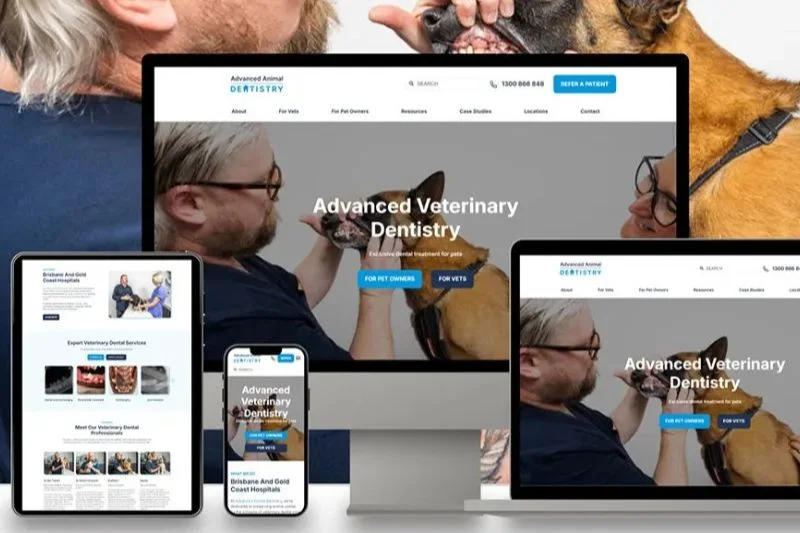
Veterinary dental clinic website design by SVMG displayed across desktop, tablet and mobile devices for specialist veterinary marketing.

Visual identity and voice


And finally, the bit everyone thinks of – logos, colours and your voice in the marketplace.

This starts with a professional logo and clear, consistent brand colours.

Next comes a professional veterinary website that connects with both vets and owners and ensures you are visible in the rapidly changing search landscape.

Then, the supportive social media and communication landscape with the same professional look and feel.

The non-digital assets – uniforms, signage and the use of colour and materials throughout your building.

And finally woven through everything, the same tone of voice – professional and knowledgeable, but approachable and in line with your values.

That’s brand.

And it’s crucial to get it right.

Learn more here about our approach to branding a veterinary referral centre.

Veterinary professional assisting a pet owner with a cat carrier in a modern clinic featured in SVMG referral veterinary marketing.

Marketing your referral brand


Once you have your brand right, you need the right people to see it.

First up, I’d like to address a key misunderstanding in the veterinary marketing world.

Lots of vets I talk to seem to think that social media is the primary channel for marketing veterinary services.

However, the return on investment from giving all your content to social media channels simply doesn’t stack up.

Lots of effort.

A few likes, maybe.

Minimal appointments booked.

Simple fact. Your website is the place where everyone goes to get a real sense of your brand and it’s your website that generates enquiry.

If you put your content on your website first in the form of articles, videos and case studies, you give people more information to support their decision to contact you, and as a bonus, you leverage the resulting free search traffic.

The more content you add, the more trust you build with traditional and emerging search engines, and the more traffic comes to your website.

And another bonus… conversion rates for traffic coming from free search are way higher than conversion rates from social media.

More high-quality website content =>more eyes on your brand => more trust =>more appointments.

“Your website is the place where everyone goes to get a real sense of your brand—and it’s your website that generates enquiry.”

Social media is a supportive strategy


My advice is to use social media like a signboard or sandwich board in the street, directing people back to your website for the full article/case study or explanation.

The other advantage of investing in your own website is that you build a digital asset that you (not Meta) own.

Your content stays visible for as long as you choose and continues to deliver returns to you (not Meta) for years to come.

Website content can also be repurposed into newsletters to vets and owners and advertising campaigns.

From there, careful data analysis will confirm where the best returns are coming from and you will enjoy continued return on your marketing investment.

“Social media is a signboard. Your website is the destination.”

Meet the Author

Deb Croucher

Deb Croucher is the founder of SVMG, a strategic growth partner for veterinary businesses. A former veterinarian and practice owner, Deb combines industry fluency, commercial strategy, and structured marketing systems to help clinics, specialists, suppliers, and industry partners become clearer, more trusted, and better positioned for growth.

Learn More  

Frequently Asked Questions

Find answers to common questions about our clinic and your pet’s visits below.

Branding is essential because it defines your professional identity, differentiates you from general practice vets, and builds trust with both referring vets and pet owners. It encompasses more than just logos and colours—your brand also includes your reputation, values, patient care approach, and how you communicate.

Unlike general vet practices, specialist and referral centres must market to two very distinct audiences: referring vets and pet owners. Each group has different expectations, so your branding must bridge that gap while maintaining clarity, trust, and professionalism.

A strong veterinary brand includes:

  • Professional identity and positioning: Clearly stating who you are, what you do, and how you’re different.
  • Reputation and trust: Built over time through clinical excellence and consistency.
  • Visual identity and voice: Includes logos, colours, website design, and the tone of all communications.

Your brand message must highlight your expertise, advanced equipment, and approach to care. Your website should clearly explain your services to both referring vets and pet owners. Case studies and patient stories are powerful tools to demonstrate your clinical outcomes and build emotional connections.

Trust is crucial for long-term success. Referring vets and pet owners must feel confident in your clinical outcomes, ethical standards, and communication style. Consistent branding across digital and physical touchpoints reinforces this trust.

Your website is the primary hub for your brand. It’s where most potential clients go to learn about your services and make enquiries. Unlike social media, your website builds long-term value, improves search engine visibility, and supports higher conversion rates.

Yes—but as a secondary tool. Think of social media as a signpost directing people to your website. The real value comes from using social media to amplify high-quality website content like articles, videos, and case studies, not as a standalone platform for growing your brand.

Track where your traffic and enquiries are coming from. Analyse performance data to identify which channels (e.g., website SEO, email campaigns, social media referrals) deliver the best return on investment. Refine your strategy based on these insights.

Content hosted on your own veterinary website is a long-term asset you control. It stays visible and valuable for years, while social media posts are fleeting and owned by third parties like Meta. Building your website content creates lasting value and generates sustained enquiries.