We tested how AI recommends vet clinics. The results surprised us.


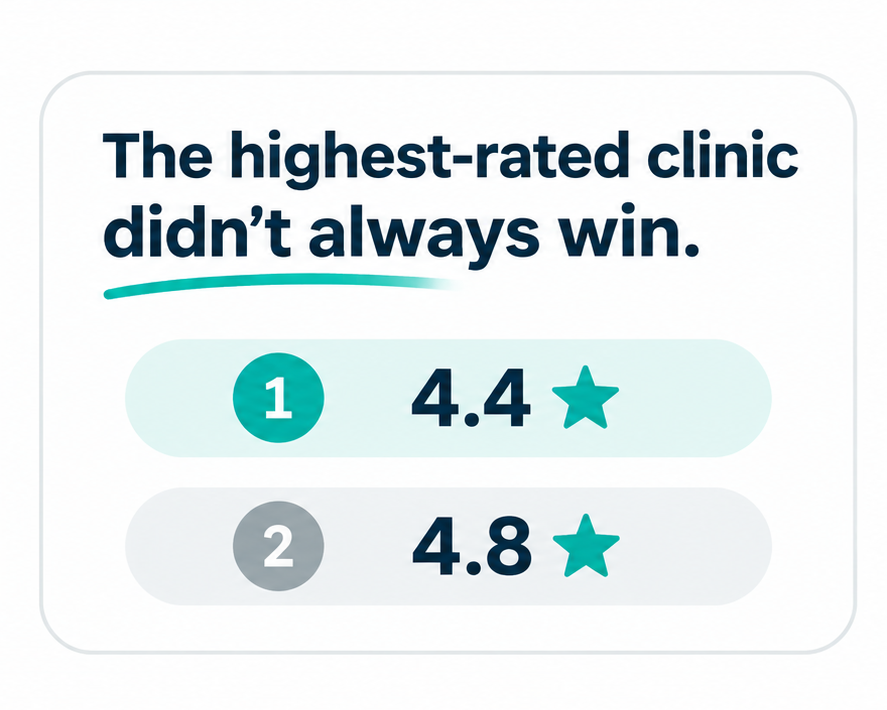
A 4.4-star vet clinic beat 4.8 and 4.9-star competitors for the top spot in an AI recommendation. We know because we tested how AI recommends vet clinics. Forty questions, 10 suburbs, five capital cities, with ChatGPT and Google’s AI Mode side by side.

Star ratings mattered less than we expected. AI favoured the clinics that spelt out the care they give in their reviews, on their website and in their vet bios. And when the question got specific, the whole list changed.

We haven’t named any clinics. The patterns matter more than the names, and they raise some important questions for every veterinary practice.

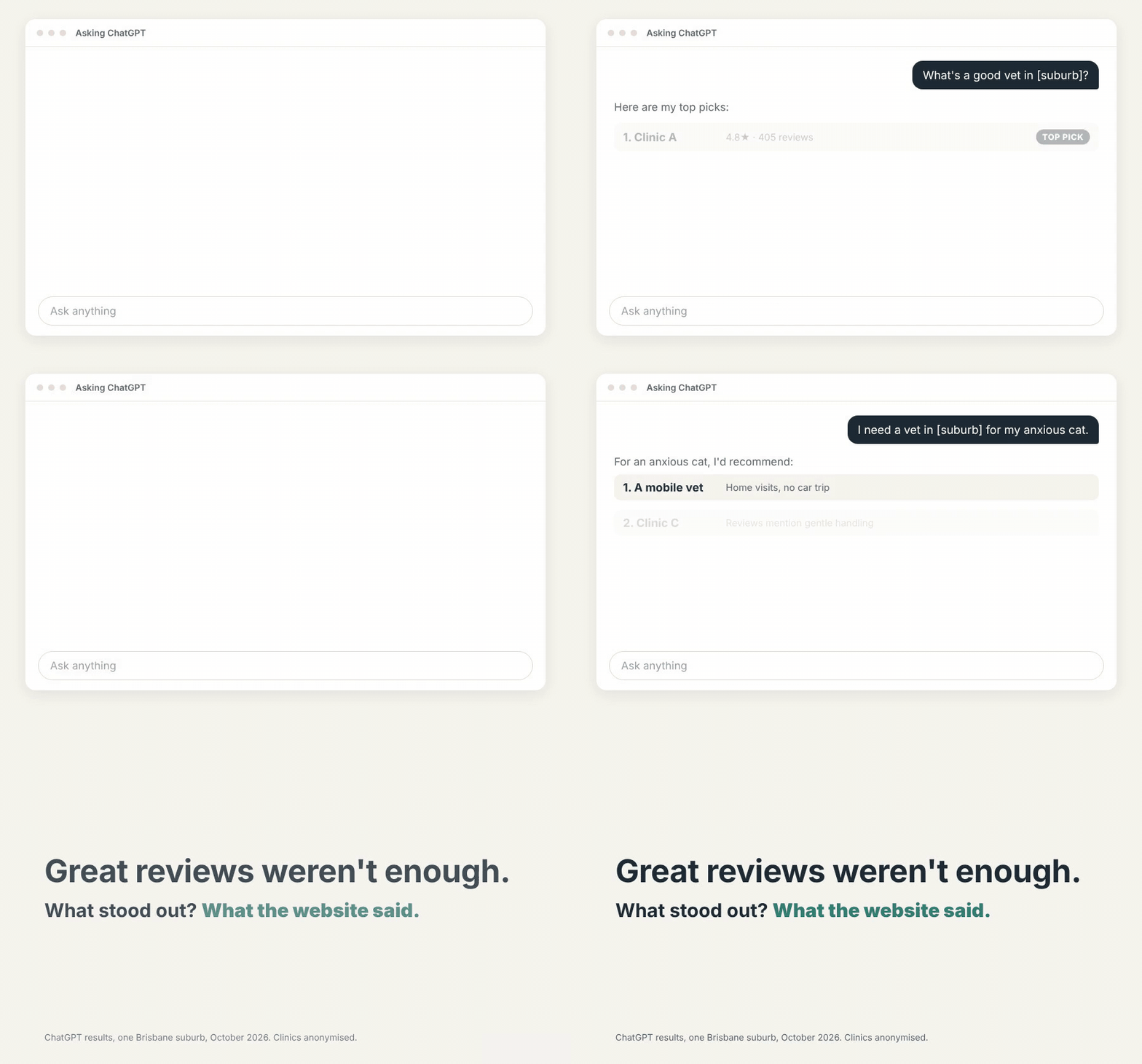
Animation showing how AI recommends vet clinics differently when the question changes

The test: 40 AI vet recommendations across five capital cities


We picked an inner and an outer suburb in Sydney, Melbourne, Brisbane, Adelaide and Perth. In each one, we asked two common types of questions a pet owner might ask:

1. “What’s a good vet in (suburb)?”
2. “I need a vet in (suburb) for my anxious cat. Who would you recommend?”

Every question went to ChatGPT, with memory and personalisation switched off, and to Google’s AI Mode, which is used when signed in to a Google account. Then we studied every clinic that came back and asked one question: what earned them the spot?

This is a snapshot from October 2026, one run per question. AI answers shift from day to day, so read the findings as patterns rather than a league table. Results can also vary depending on location, the question asked, the AI platform and the information available at the time. Our findings highlight useful patterns, not a guaranteed formula for getting recommended.

“AI can’t highlight your strengths if it can’t find evidence of them.”

Comparison of two vet clinics: the highest-rated clinic was not recommended for an anxious cat

Finding 1: Local SEO signals shaped who AI recommended first


Ask AI for “a good vet”, and geography comes first. ChatGPT and Google each put a clinic in the suburb itself at number one in 7 of the 10 suburbs.

Proximity often beat ratings. In one suburb, a 4.4-star clinic on the main road outranked 4.7 and 4.8-star practices five minutes away.

AI then repeated the practical details to pet owners: opening hours, Sunday appointments, parking, even which clinic sits inside which shopping centre. It also got some of them wrong. Google gave one clinic two different addresses in two separate answers.

Your move: check that your practice name, address, phone number and hours match on your Google Business Profile, your website and every directory listing. When your details conflict, AI has to guess.

Finding 2: Your Google reviews are now your AI sales script


AI often looked past the star rating. It read what clients wrote, then repeated it to the next pet owner.

Clinics were recommended because reviews said, “gentle with nervous cats”, “never rushed”, “explained everything” and “fair pricing”. One practice earned its place from a single review that praised a named vet for settling a terrified cat.

The flip side is confronting. AI also passed on complaints about cost, communication, parking and crowded waiting rooms. In one answer, Google told a pet owner that some clients with anxious cats had left a clinic for a cat-only practice down the road.

Google leaned on reviews hardest. For the anxious cat question, most of its answers were built from what reviewers said about how staff handled nervous pets. Reviews are only one of the sources AI draws on, but they are one of the few written in your clients’ own words.

Your move: when you ask for a review, ask clients to describe what your team did for their pet. Specific reviews give AI something worth quoting. Then read your existing reviews the way AI does: what would it repeat about you?

Finding 3: The right website content can change who AI recommends


This is the finding that should make you sit up.

When we changed the question from “a good vet” to “a vet for my anxious cat”, the rankings reshuffled. Seven of ChatGPT’s 10 top picks lost first place. Two disappeared completely, including a 4.8-star clinic with more than 400 reviews.

The clinics that rose had websites that explained, in detail, how they care for anxious pets. ChatGPT was open about it. One clinic was recommended because “their website confirms” its cat-friendly accreditation. Another for “a particularly well-documented” low-stress approach. A third went from not appearing at all to a top recommendation, with one page about stress-free visits providing particularly relevant detail.

The details AI picked up were specific:

  • Cat Friendly Clinic and Fear Free accreditation
  • Separate cat waiting areas, consult rooms and wards
  • Longer appointments for nervous patients
  • Pre-visit calming medication plans
  • Named programs for anxious pets
  • Home visit areas for mobile vets

It even borrowed phrases. A clinic that described its “on-staff cat whisperer” was quoted using exactly those words.

This is where website strategy matters. If your team is brilliant with nervous cats, the question is simple: does your website say so?

For clinics that want to be known for anxious-pet care, that means explaining how they approach appointments, the experience and training behind their care, and why those details matter to a worried pet owner.

For another practice, the priority might be dentistry, surgery, senior pet care or something entirely different.

The principle is the same. Your website should clearly communicate the services and strengths you want to be known for. It’s not about adding more pages for the sake of it. It’s about giving the right pet owners the information they need to understand why your practice is the right choice.

Your move: look at the services you most want to be known for. Does your website explain how you deliver them, what makes your approach different and why a pet owner should choose you? Those details may be worth more than another generic list of services.

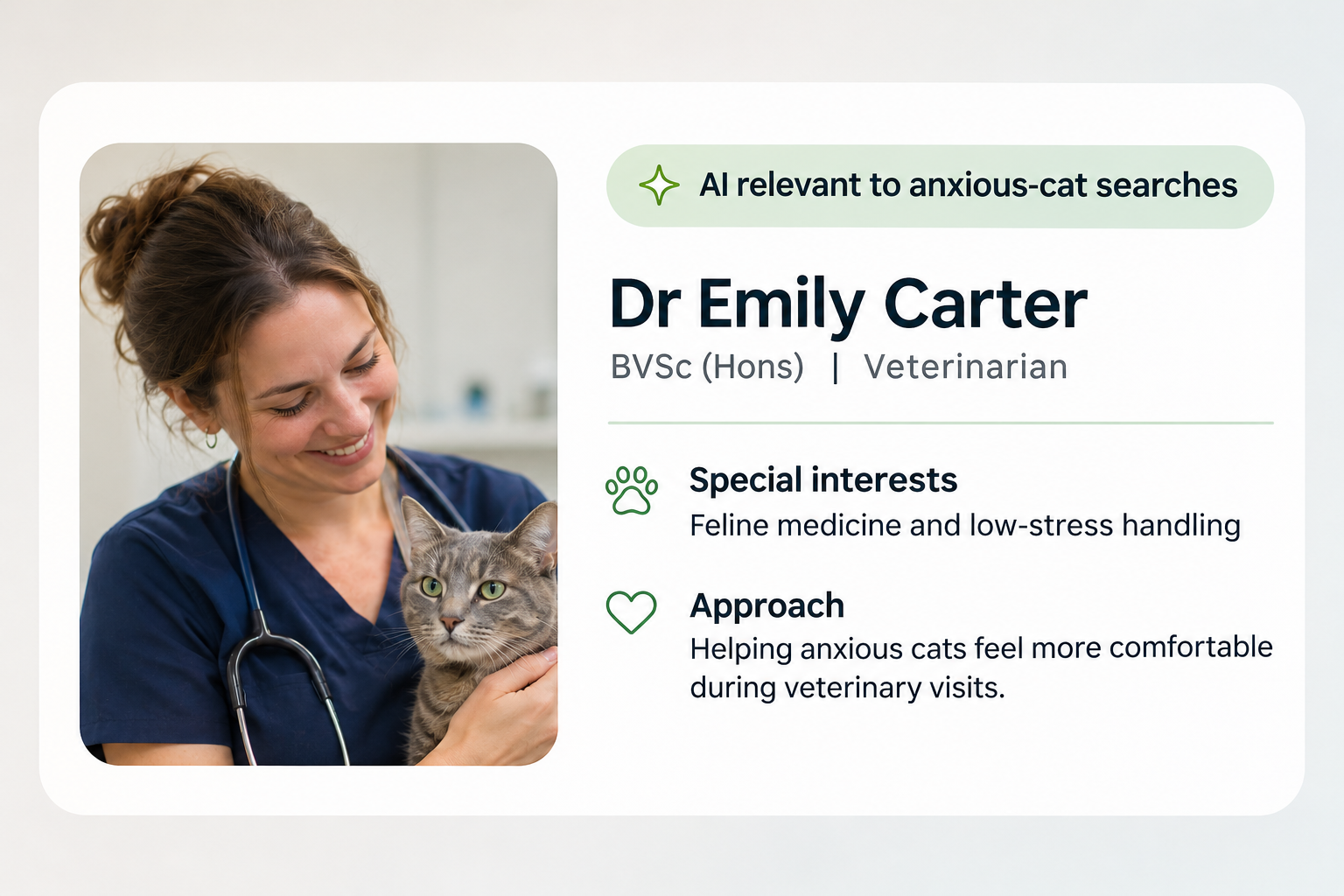
Vet team profile card showing clinical interests

Finding 4: Vet team profiles turn your people into recommendations


AI didn’t stop at recommending clinics. It recommended vets, by name.

ChatGPT told pet owners to “ask for Dr. (name), who has an interest in feline medicine”. Google named a vet at almost every clinic it listed, along with each vet’s years of experience and special interests. All of it came from team pages and reviews.

In one suburb, those details appeared to make a difference. A corporate clinic became ChatGPT’s top local pick for anxious cats because its team page said two of its vets had interests in behaviour and stress-free visits. The independent clinic that led the general list didn’t make that answer at all.

Your move: give every vet and nurse a bio that names their interests, their training and the cases they love. Your team is the one thing a competitor can’t copy. Make sure pet owners and AI can see it.

Independent vs corporate vet clinics: what AI told pet owners


Three more findings stood out.

ChatGPT and Google don’t agree. For the general question, they chose the same top clinic in 8 of 10 suburbs. For the anxious cat, only 4 of 10. ChatGPT leaned on websites. Google leaned on reviews. Focusing on one source of information isn’t enough.

AI is talking about ownership and fees. In 15 of the 20 general answers, AI pointed out that a clinic was independent or family-owned, often as a reason to choose it. Google labelled other practices “corporate” and praised one independent clinic for having no “corporate sales targets”. Half the general answers raised price, from fair fees and payment plans to on-the-spot insurance claims. For independents, that’s an opening: say who owns your practice and how you handle fees. For corporate clinics, it’s a reason to put your local vets front and centre.

AI gets things wrong. We saw a clinic listed at two different addresses, with a star rating shown against the wrong business. You can’t control every answer. You can control the information AI draws from.

Your next client might already be asking AI about your clinic


Here’s what struck us most. None of the clinics that performed well was doing anything clever with AI. Their websites, reviews and listings clearly explained what they offer and who they help.

So, try it yourself. Ask ChatGPT and Google to recommend a vet in your suburb. Then ask a more specific question about a service your practice is known for.

Does your clinic appear? More importantly, does the answer reflect what makes your practice worth choosing?

That’s where the strategy behind your website starts to matter.

At SVMG, we don’t start with a template and fill in the blanks. We start with your practice: your services, the clients you want to attract and what sets you apart. Then we build a custom veterinary website that communicates those strengths, supports your visibility across Google and AI search, and helps turn interest into enquiries.

Because being recommended is only the beginning. Your website still needs to give pet owners the confidence to book.

Book a website consultation →

Meet the Author

Deb Croucher

Deb Croucher is the founder of SVMG, a strategic growth partner for veterinary businesses. A former veterinarian and practice owner, Deb combines industry fluency, commercial strategy, and structured marketing systems to help clinics, specialists, suppliers, and industry partners become clearer, more trusted, and better positioned for growth.

Learn More  

Frequently Asked Questions

Frequently asked questions about how AI recommends vet clinics

In our test, ChatGPT weighed location, Google ratings and review themes, then leaned heavily on clinic websites for specific needs. Accreditations, service pages and vet bios often seemed to shape who made the list.

Less than most practice owners expect. Clinics rated 4.4 were recommended ahead of clinics rated 4.8 and 4.9. Location, the words in reviews and what your website explains often counted for more.

AI Mode is a Google search option that writes an answer instead of listing links. For vet searches, it drew on Google Business Profiles, reviews, clinic websites and local community pages. For the bigger picture, read how AI search is changing the way pet owners find veterinary clinics.

AI often pointed out when a clinic was independent or family-owned, and sometimes gave it as a reason to choose them. Corporate clinics still won when their websites and team pages described specific services and people.

Start with the services you most want to be known for, and make sure your website explains how you deliver them and what makes your approach different. List your accreditations, write team bios that name each vet’s interests, and when you ask for reviews, ask clients to mention what your team did for their pet.

Yes. We saw incorrect addresses and a rating attached to the wrong clinic. Consistent details across your Google Business Profile, website and listings reduce the risk.